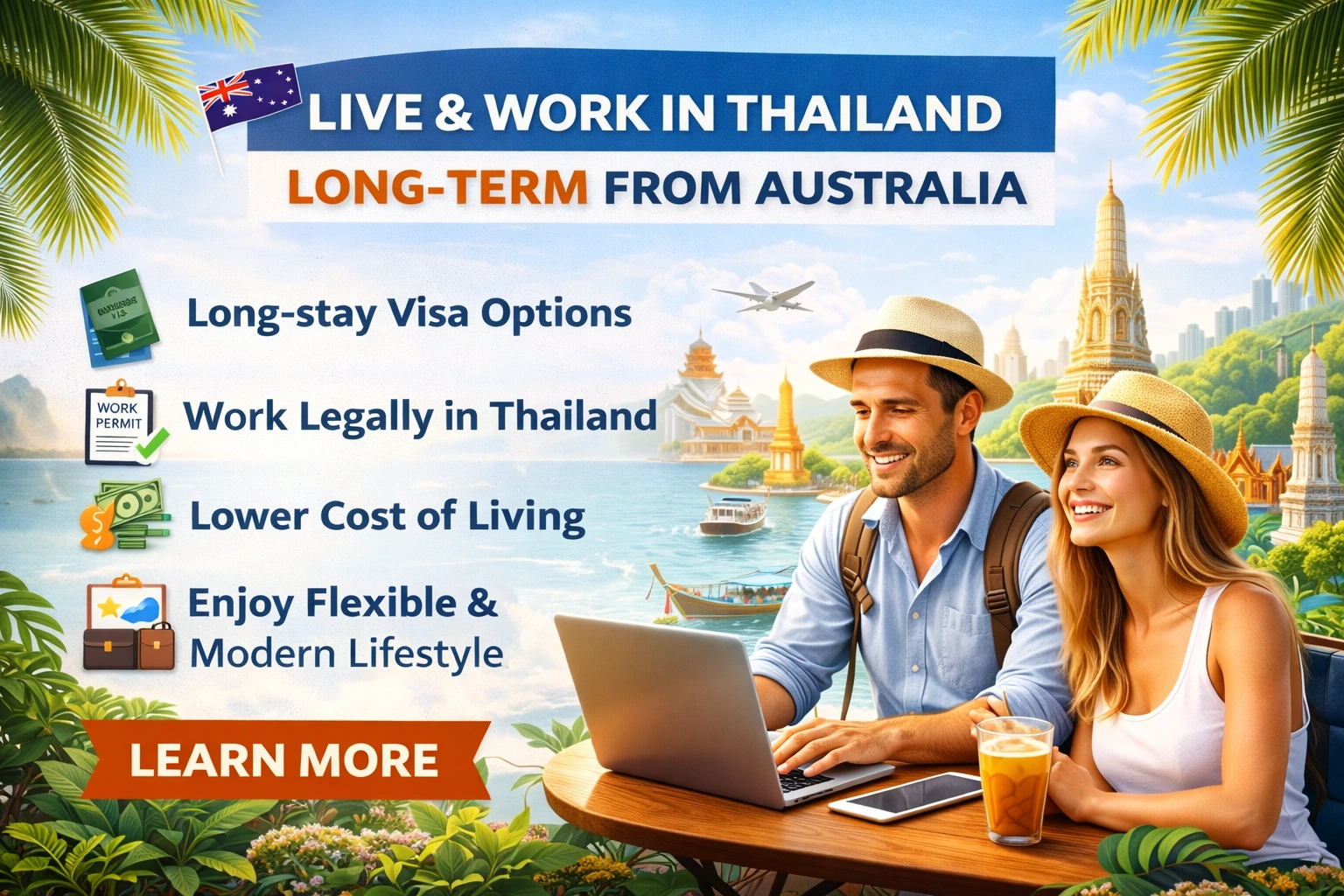
For many Australians, the idea to live and work in Thailand from Australia is no longer just a dream. With flexible visa options, a lower cost of living, strong digital infrastructure, and a welcoming culture, Thailand has become one of the most attractive long-term destinations for Australians seeking both lifestyle and professional opportunities outside Australia.
This guide explains the realistic, legal, and sustainable ways Australians can live and work in Thailand long-term—whether as remote workers, business owners, employees, or family members of Thai nationals.
Why Thailand Is Popular with Australians Seeking Long-Term Living
Australians adapt easily to life in Thailand due to cultural openness, established expat communities, and English-friendly environments in major cities. Beyond lifestyle appeal, Thailand offers strategic advantages for long-term residence:
-
Affordable housing, healthcare, and daily expenses
-
Modern internet infrastructure for remote work
-
International schools and hospitals
-
Easy regional travel across Asia
-
Strong expat networks in Bangkok, Phuket, Chiang Mai, and Pattaya
For Australians looking to balance quality of life with income generation, Thailand offers flexibility that few countries can match.
Can Australians Legally Live and Work in Thailand Long-Term?
Yes—but only with the correct visa and legal structure. One of the most common mistakes is assuming that long stays automatically allow employment. In Thailand, working without proper authorization is illegal, even for online or remote work.
To live and work in Thailand from Australia legally, you must hold:
-
A valid long-term visa
-
Permission to work (if applicable)
-
A structure that matches your income source
The best option depends on how you plan to work.
If you want the official Thai government overview on long-stay pathways and requirements, review the Thailand long-stay visa options here: Thailand long-stay visa options.
Best Visa Options to Live and Work in Thailand from Australia
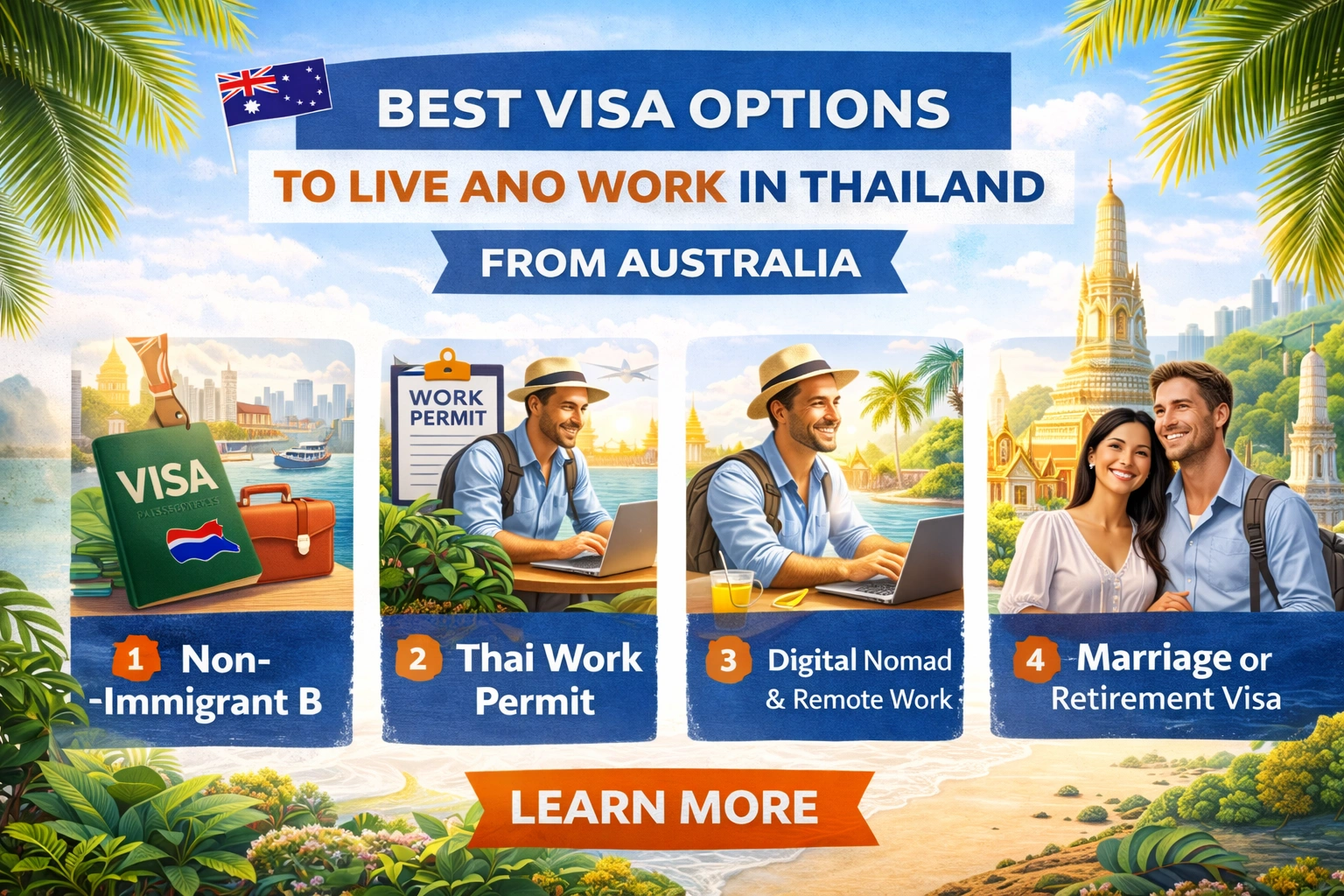
1. Non-Immigrant B Visa (Business & Employment)
This visa is suitable for Australians employed by a Thai company or running a registered Thai business. For detailed guidance on this option, consult the Business Visa (Non-Immigrant B) requirements.
Key points:
-
Requires a Thai employer or company setup
-
Must be paired with a work permit
-
Renewable annually
-
Suitable for professionals, managers, and investors
This is the most traditional and fully compliant way to work in Thailand.
2. Thai Work Permit (Essential for Local Employment)
If you work for a Thai entity—regardless of role—you need a work permit.
It specifies:
-
Job title
-
Employer
-
Work location
Changing roles or employers requires updating the permit. Working outside these terms can result in fines or visa cancellation.
For an authoritative reference on work permission basics and employer compliance, see the Thailand work permit requirements page: Thailand work permit requirements.
3. Digital Nomad & Remote Work (Gray Area Explained Clearly)
Many Australians live in Thailand while working online for overseas clients or Australian companies. However, Thailand does not officially recognize a “digital nomad visa” (as of now). The Destination Thailand Visa (DTV) and LTR Visa are increasingly popular alternatives for remote workers.
Common long-stay visas used in this scenario include:
-
Tourist visa extensions (short-term, not sustainable)
-
Education visas (study-based, limited work allowance)
-
Long-term visas with offshore income
⚠️ Important: Even remote work can be considered “working in Thailand” if income-generating activity occurs while physically present. Professional visa advice is strongly recommended for long-term compliance.
4. Thai Marriage Visa (Non-Immigrant O)
⚠️ Important: Even remote work can be considered “working in Thailand” if income-generating activity occurs while physically present. For those married to Thai nationals, the Spouse Visa option combined with proper work authorization is a more stable long-term solution. Professional visa advice is strongly recommended for long-term compliance.
Benefits:
-
Renewable yearly inside Thailand
-
Allows residence without frequent exits
-
Work permit can be added later
This is one of the most stable long-term residence options for Australians with Thai families.
5. Retirement Visa (Living Yes, Working No)
Available to Australians aged 50+, the [[LINK:2663]]Retirement Visa allows long-term living but does not permit work. It is ideal for retirees who have sufficient savings or pension income and do not plan to work in Thailand.
It is ideal for retirees who:
-
Have sufficient savings or pension income
-
Do not plan to work in Thailand
-
Want a stable, renewable long-stay option
Popular Locations for Australians Living and Working in Thailand
-
Bangkok – Corporate jobs, international companies, high earning potential
-
Phuket – Lifestyle businesses, tourism, remote work
-
Chiang Mai – Digital nomads, low living costs, creative industries
-
Pattaya – Retirees, service businesses, coastal living
Each city supports different work styles and visa strategies.
Cost of Living for Australians in Thailand
Compared to Australia, Thailand offers significantly lower living costs:
-
Comfortable monthly living: AUD 1,500–2,500 (varies by city)
-
Private healthcare: affordable and high quality
-
Housing: modern apartments at a fraction of Australian prices
This financial flexibility allows Australians to work fewer hours, save more, or reinvest into businesses.
Common Mistakes Australians Should Avoid
-
Working without a valid visa or work permit
-
Relying on back-to-back tourist visas
-
Assuming online work is always legal
-
Ignoring 90-day reporting obligations
-
Using incorrect financial documentation
These mistakes often lead to visa denials, fines, or forced exits.
Long-Term Planning: The Smart Way to Live and Work in Thailand
To successfully live and work in Thailand from Australia long-term, Australians should think beyond short-term visas. The most stable paths involve:
-
Choosing the right visa based on income source
-
Maintaining clear financial records
-
Renewing visas inside Thailand legally
-
Planning for tax and compliance issues early
With the right structure, Thailand can be a long-term home—not just a temporary stop.
Final Thoughts
Thailand offers Australians a rare combination of lifestyle freedom and professional opportunity. Whether you are building a business, working remotely, or relocating with family, it is entirely possible to live and work in Thailand long-term—as long as you do it legally and strategically.
For Australians ready to take the next step, proper visa planning is the foundation of a smooth and sustainable life in Thailand.