In our experience, the plan to retire in Thailand from Australia is no longer “just a dream” for many Australians. Thailand offers warm weather year-round, a lower cost of living, solid private healthcare, and a relaxed pace of life—without the price tag many retirees face back home.
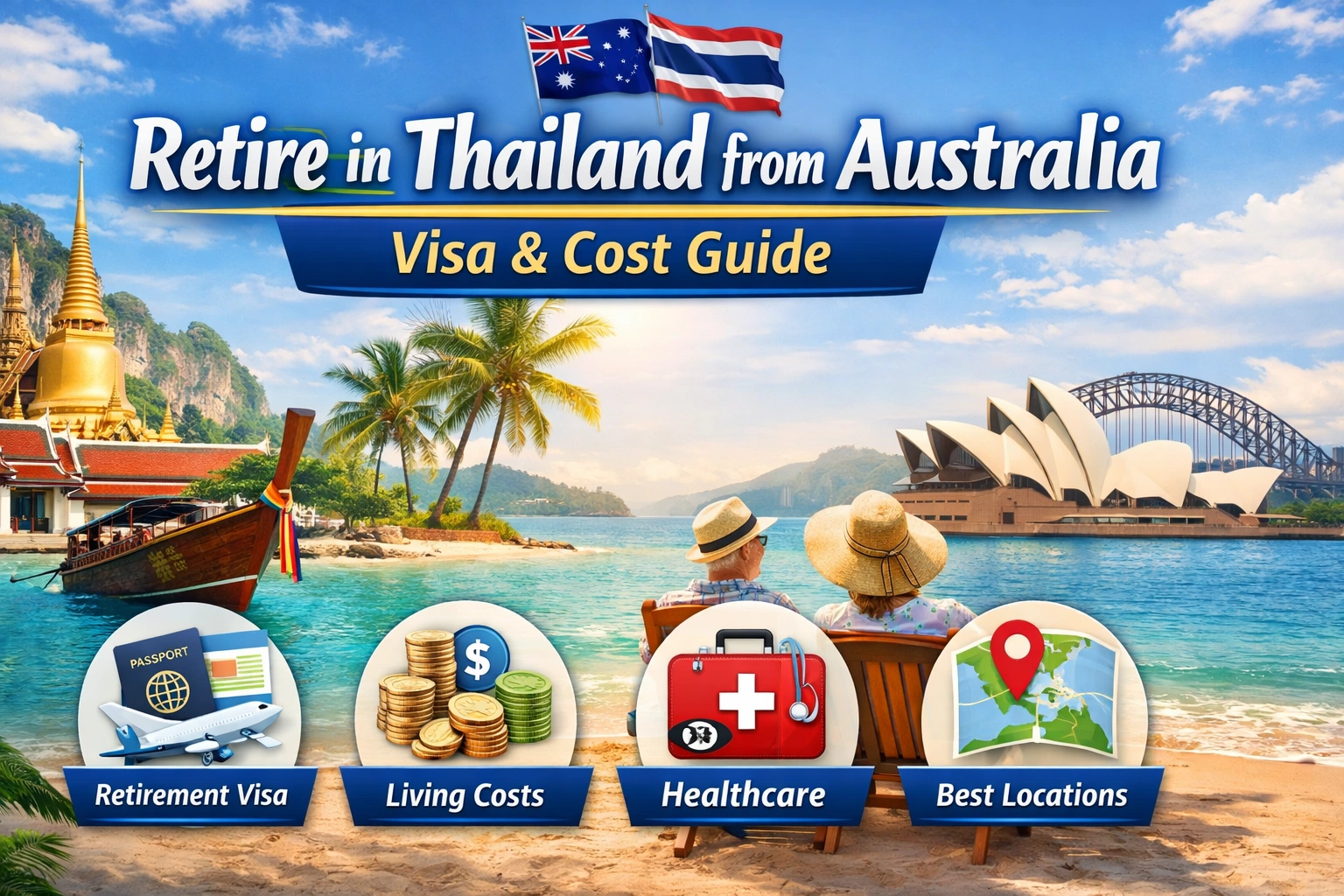
This guide walks you through the essentials before you relocate, including visa options, financial requirements, healthcare, cost of living, taxes, lifestyle planning, and common mistakes to avoid.
Scenic beach lifestyle in Thailand—one of the biggest draws for Australian retirees.
Why Australians Choose to Retire in Thailand
Australia and Thailand have long been connected through travel, culture, and lifestyle. Many Australians first visit Thailand on holiday and later realize it fits what they want in retirement: comfort, convenience, and better value for day-to-day living.
Retirees often mention the same reasons. Thailand can offer a comfortable lifestyle with a lower monthly budget, particularly in food, services, and housing. Add friendly communities in popular expat areas and it becomes easier to settle in.
Key reasons Australians consider Thailand include:
-
Lower daily living costs compared to Australia
-
Strong private healthcare options at reasonable prices
-
A welcoming culture with English commonly used in expat zones
-
Beaches, warm climate, and a lifestyle that supports outdoor living
-
Established Australian and international retiree communities
Retirement Visa Options for Australians
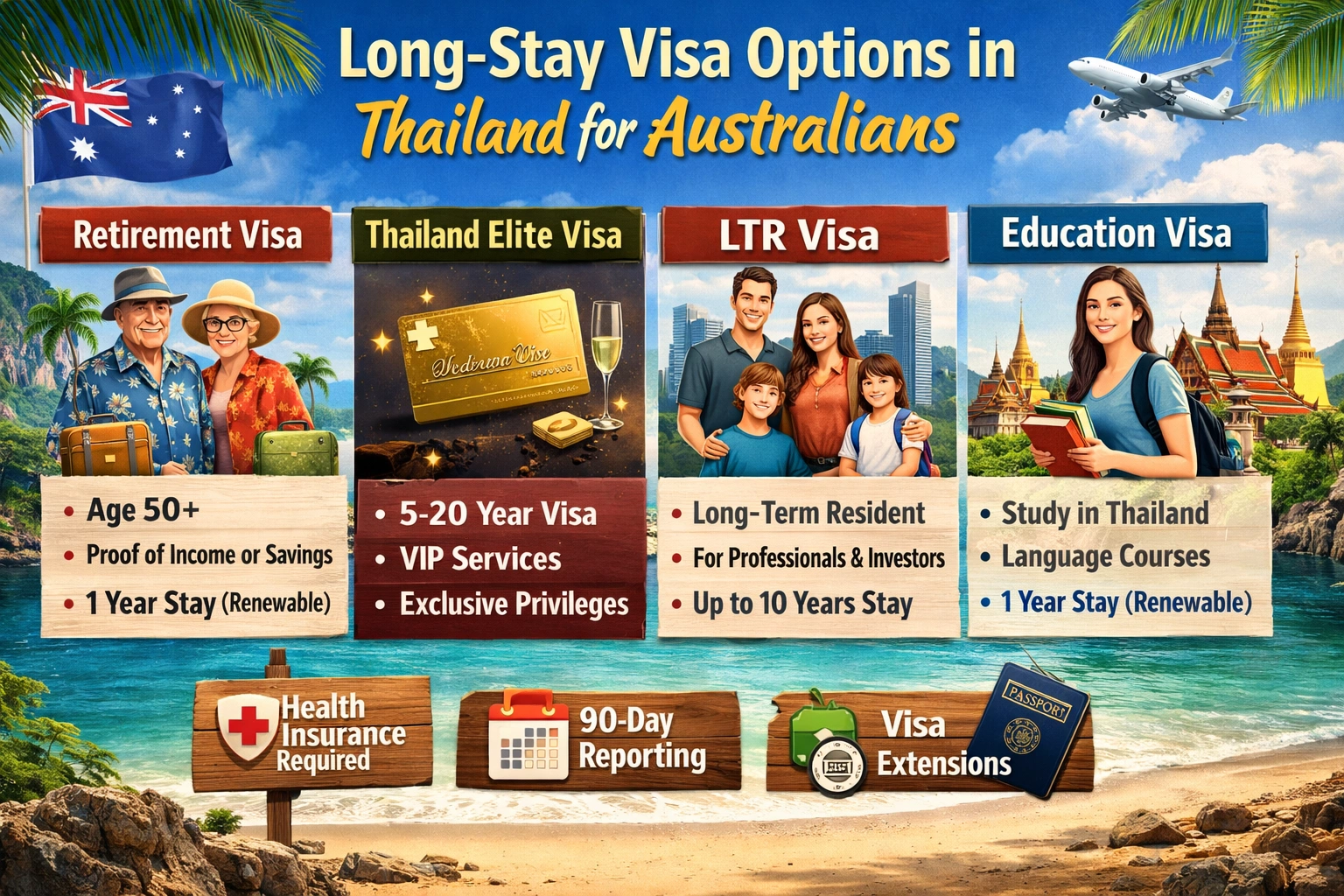
One of the most important steps when planning to retire in Thailand from Australia is choosing the correct visa. For most retirees aged 50+, Thailand’s retirement visa routes are the most straightforward.
Thai Retirement Visa (Non-Immigrant O-A / O-X)
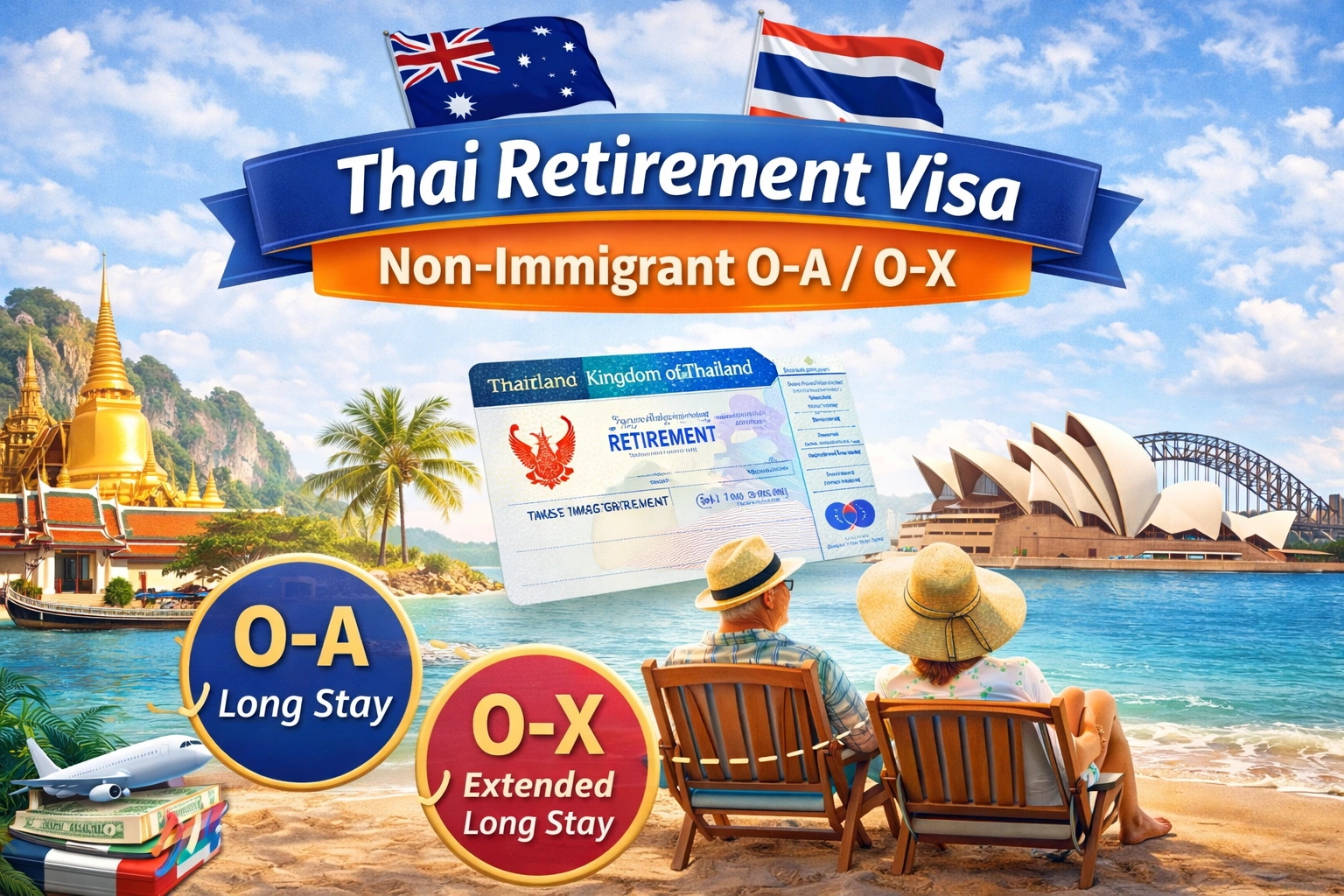
Non-Immigrant O-A (Long Stay)
This is the most common option for retirees. It is typically valid for one year and renewable annually, provided you maintain the required financial evidence and health insurance.
Non-Immigrant O-X (Extended Long Stay)
This option is designed for long-term planning and can cover up to 5–10 years (with renewals/extension rules). It comes with higher financial requirements but may suit retirees who want longer stability.
Both options allow retirees to live in Thailand legally without working.
Financial Requirements You Must Prepare
Financial planning is where most visa applications succeed—or fail. In practice, retirees should prepare documents early and keep them consistent, because Thai immigration is strict about proof and timing.
Most applicants use one of these pathways:
-
A Thai bank deposit (commonly around THB 800,000), or
-
Monthly pension/income (commonly around THB 65,000), or
-
A combination of savings and income
Australians commonly manage this through pension transfers, international banking, and maintaining a Thai bank account for compliance. The key is clear documentation that matches the visa route you choose.
Cost of Living: Thailand vs Australia
Affordability is one of the biggest motivations to retire in Thailand from Australia. While costs vary by city and lifestyle, many retirees find they can maintain a comfortable routine at a lower monthly spend than in Australia.
A realistic estimate many retirees use as a planning range:
-
Comfortable lifestyle: AUD 1,500–2,500/month
-
Higher-end lifestyle: AUD 3,000+/month
Typical expense categories include housing, utilities, food, local transport, and health insurance. Choosing the right location is the biggest factor—Bangkok and Phuket can cost more than quieter towns, but they may offer greater convenience.
Local markets and dining are often a major lifestyle upgrade for retirees.
Healthcare and Medical Insurance in Thailand
Thailand is well known for modern private hospitals, especially in major cities. Many facilities offer English-speaking doctors, short waiting times, and competitive pricing for treatments.
However, most retirement visa routes require valid health insurance that meets Thailand’s rules. Many Australians choose international or expat-focused plans to ensure coverage for inpatient and outpatient needs. Healthcare is a big advantage in Thailand—insurance is what makes it predictable.
Best Places to Retire in Thailand for Australians
Thailand offers different retirement styles depending on what you value most: hospital access, walkability, beach life, or a cooler climate.
Popular destinations include:
-
Bangkok – top hospitals, international services, city convenience
-
Chiang Mai – relaxed pace, cooler seasons, strong expat network
-
Phuket – beach lifestyle, international community, modern amenities
-
Hua Hin – quiet, comfortable, popular with long-term retirees
The “best” place depends on your budget, healthcare priorities, and what you want your daily routine to look like.
Tax Considerations for Australian Retirees
Tax planning is often overlooked, but it matters—especially for pensions and overseas income. Before you move, it’s smart to understand how your Australian tax residency may change and what Thailand considers taxable.
Retirees commonly review:
-
Australian tax residency status
-
How pensions and retirement income are treated
-
Thailand’s rules on foreign income
-
The Double Tax Agreement between Thailand and Australia
Many retirees speak with an international tax advisor before making the move, especially if their income sources are complex, to ensure they remain compliant while avoiding unnecessary double taxation and unexpected liabilities.
Lifestyle, Culture, and Daily Life
Thailand is known for a respectful, relaxed culture that suits retirees who want a calmer rhythm. Daily life can be simple once you build routines—markets, cafes, local services, and a social circle in expat areas.
Australians often enjoy:
-
Friendly locals and established expat communities
-
Easy domestic travel for weekends and short trips
-
Excellent food options (Thai and international)
-
A generally safe environment in retirement-friendly areas
A smooth transition usually comes down to careful planning, realistic expectations, and being open to local customs and daily life in Thailand.
Common Mistakes Australians Make When Retiring in Thailand
Most problems are avoidable with better preparation. The common issues we see include:
-
Choosing the wrong visa type for your real situation
-
Financial documents that don’t match the visa requirements
-
No long-term insurance plan (or the wrong coverage)
-
Ignoring tax implications until it becomes a problem
-
Renting property without proper checks or clear contracts
Good planning reduces stress, prevents costly mistakes, and helps you enjoy retirement sooner with greater confidence and peace of mind. Select 73 more words to run Humanizer.
Final Thoughts: Is Retiring in Thailand Right for Australians?
If you want warmth, affordability, and quality of life, choosing to retire in Thailand from Australia can be a smart and rewarding move. With the right visa strategy, clean financial documentation, suitable insurance, and a realistic lifestyle budget, Thailand can offer one of Asia’s most comfortable retirement options for Australians.
Frequently Asked Questions (FAQ)
1. What is the difference between a Non-Immigrant O-A and O-X retirement visa?
The O-A visa is valid for one year and renewable annually, while the O-X visa allows a longer stay of up to 5–10 years. The O-X visa requires higher financial evidence but offers greater long-term stability.
2. Can Australians work in Thailand with a retirement visa?
No. Both Non-Immigrant O-A and O-X retirement visas do not allow employment or business activities. Retirees must apply for a different visa type if they wish to work.
3. How much money do Australians need to qualify for a Thai retirement visa?
Applicants typically need either a Thai bank deposit (around 800,000 THB for O-A) or a minimum monthly income (around 65,000 THB). O-X visas require significantly higher savings or income levels.
4. Is health insurance mandatory for a Thai retirement visa?
Yes. Valid health insurance covering medical expenses in Thailand is required for both O-A and O-X retirement visas, and coverage must meet Thai immigration regulations.
5. Can Australian retirees renew their retirement visa while staying in Thailand?
Yes. Most retirees can renew their retirement visa inside Thailand, provided they continue to meet financial, insurance, and reporting requirements.